FIFA built the biggest digital engagement machine in sports history to sell its $13 billion World Cup, and that same machine is now spreading the Messi favoritism conspiracy faster than FIFA can deny it.
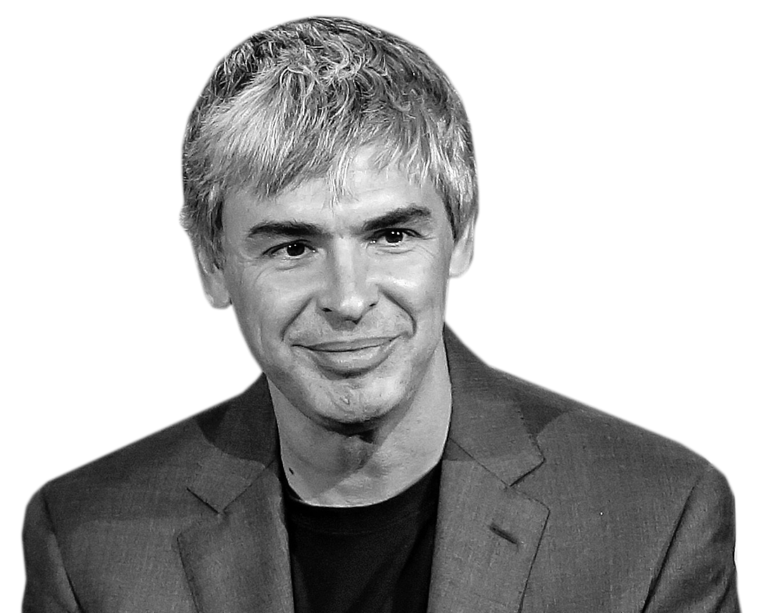
One X post did most of the damage in under 48 hours. It showed FIFA president Gianni Infantino smiling, and accused him of having “successfully taken out all of Messi’s competition.” By Wednesday it had passed 1 million views and 90,000 likes. On TikTok, a video accusing Lionel Messi of offering to pay “millions” for additional penalty kicks collected more than 2 million likes. Neither claim came with evidence. Both traveled further and faster than anything FIFA published in response.
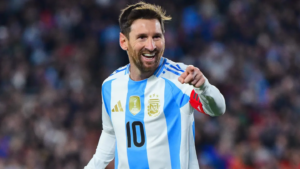
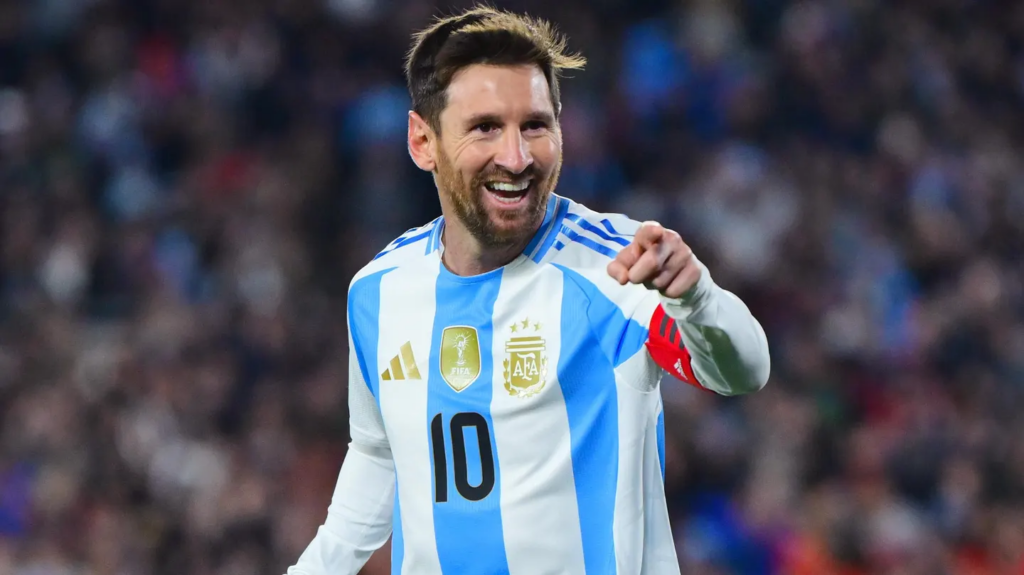
Argentina’s comeback win over fourth-ranked England on Wednesday put the defending champion into Sunday’s World Cup final against Spain at MetLife Stadium in New Jersey. It also fed a conspiracy theory that has trailed Messi since Qatar, where critics first branded him “FIFA’s princess”: the idea that soccer’s governing body is quietly steering its own tournament toward its most bankable star.
The reason this matters to more than message boards is money. FIFA projects $13 billion in revenue for the 2023 to 2026 cycle, with roughly $8.9 billion coming from this tournament alone, according to the governing body’s revised budget reported by SportsPro. The product FIFA is selling at those prices is legitimacy, a competition whose outcomes nobody controls. And FIFA’s own distribution strategy means the attacks on that legitimacy ride the same rails as the highlights. FIFA signed preferred-platform agreements with TikTok and YouTube for this World Cup, and by the end of the round of 16 it was reporting 20 billion video views across its platforms, up 485% on the same stage in 2022, per FIFA’s July 8 media release. The release also counted 42 million news stories and social posts about the tournament between June 9 and July 7, generating 7 billion engagements. Unverified accusations now scale at the same speed as goals.
The Egypt match turned a meme into a movement
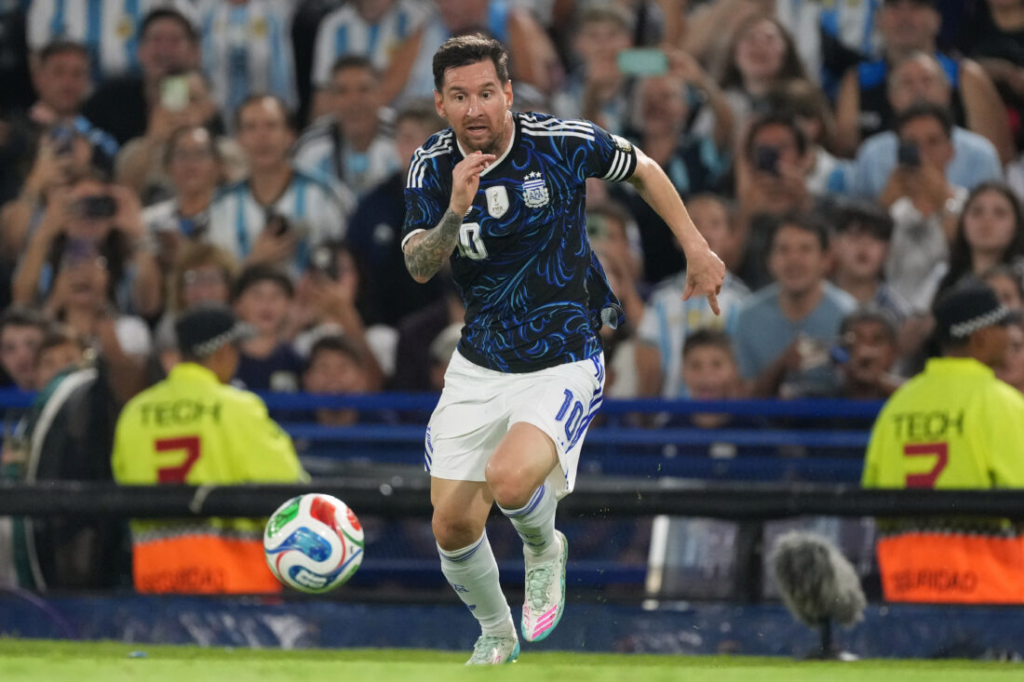
The current wave began with Argentina’s 3-2 win over Egypt, sealed in the final minutes after referees voided an Egyptian goal for a foul and, in the view of Egypt’s bench, declined to examine a potential Argentine one. Egypt coach Hossam Hassan called the game “unfair” and said his team “suffered injustice.” He went further: FIFA “wanted to keep the world champion in the competition. Perhaps they wanted Messi to stay in the running.” The Egyptian Football Association said it “cannot remain silent,” citing “several key incidents [that] raised serious concerns and left profound questions about the consistency and fairness of decisions that directly influenced the course of the game.”
Then the story escalated from grievance to sabotage. The Argentine Football Federation said last week it was investigating a potential hack of its systems after mass emails went to reporters demanding justice for Egypt. “The robbery will not go unnoticed,” the email read, alleging Argentina had won on “corrupt calls.”
The bracket gave the theory oxygen. Argentina reached the semifinals without facing any of the top 13 teams in the FIFA ranking, a historically soft path for a defending champion. Beating No. 4 England took some steam out of that critique. It did not kill it.
FIFA’s denials are competing with FIFA’s own record
Argentina manager Lionel Scaloni dismissed the allegations last week. “Honestly, people have been saying those kinds of things about Argentina for a very long time,” he said. “Social media magnifies everything. That’s where the debates begin. But there hasn’t been any favoritism.” Pierluigi Collina, FIFA’s refereeing chief, said “unfounded allegations have no place in our sport” and that “nobody can claim that FIFA refereeing can be influenced by anyone, not even by the FIFA president.”
The trouble is that FIFA’s institutional history keeps undercutting its spokespeople. This is the organization whose executives were charged in 2015 with rigging World Cup host bids for bribes. Its former president, Sepp Blatter, called FIFA a “dictatorship” in February and accused Infantino of being “submissive” to President Donald Trump. When FIFA lifted U.S. striker Folarin Balogun’s red card suspension after Trump called Infantino, Irish member of the European Parliament Barry Andrews called FIFA “profoundly corrupt.” Infantino, who created a FIFA Peace Prize and awarded it to Trump, faces re-election in 2027 and already has the backing of three confederations, according to SportsPro. An organization with that resume does not get the benefit of the doubt from a TikTok jury, however clean this tournament’s refereeing may be.
There is also an awkward commercial overlap. Messi, worth $1.1 billion by Forbes’ estimate and third on Forbes’ 2026 list of highest-paid athletes behind Cristiano Ronaldo and Canelo Alvarez, holds endorsement deals with Adidas, Mastercard and Lay’s. Lay’s is also a 2026 World Cup sponsor. Nobody has alleged anything improper about that arrangement. It simply illustrates the problem: the tournament’s biggest star and the tournament’s balance sheet are entangled enough that fans can construct a motive, even where no mechanism exists.
The case that this is noise rather than signal remains strong. Nobody has produced evidence that a single call was fixed. Many of the viral images are AI-generated. Messi’s eight goals, tying France’s Kylian Mbappé for the tournament lead, and a comeback win over England are the opposite of a protected run; they are what dominance looks like. Every World Cup produces refereeing grievance, and in a sport decided by one-goal margins, the grievance always attaches to whoever survives.
Sunday’s final kicks off at 3 p.m. against a Spain side that has been the tournament’s defensive standard. A clean Argentina loss would end the theory overnight. A narrow Argentina win, decided by a penalty or a VAR review, would hand the princess-meme economy its biggest content day yet, with $13 billion of credibility attached to every whistle.