Buffett’s public admission skipping Alphabet was a mistake.
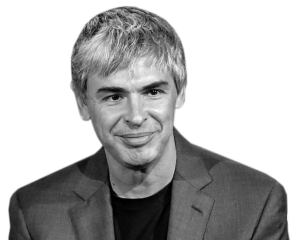
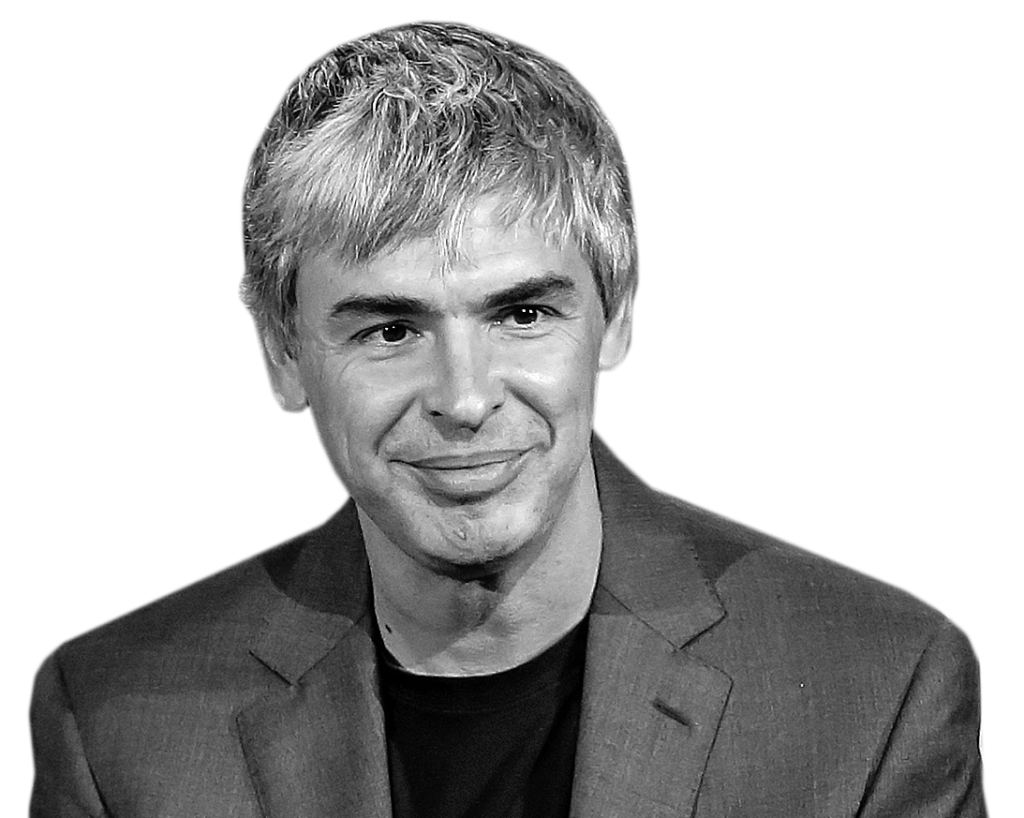
Warren Buffett spent the better part of two decades explaining why Berkshire Hathaway never owned Google. On Tuesday morning, at 95, he retired the explanation. In a CNBC interview, Buffett said he “initiated” Berkshire’s first position in Alphabet last year and admitted he “made a mistake” by not buying the company earlier. By Wednesday afternoon, Alphabet shares had jumped 3.9% to around $373, extending a nearly 2% gain from the day before, and Larry Page, cofounder of the company Buffett passed on, was worth $301.7 billion.
The single-day move added $8 billion to Page’s fortune and $7.3 billion to Sergey Brin’s, now estimated at $278.2 billion. The pair rank second and third among the world’s wealthiest people, behind only Elon Musk at more than $866 billion. Buffett, who gave up the Berkshire CEO title after 2025, sits tenth at $139.1 billion.
The rankings matter less than what the admission represents. Buffett is the most closely watched capital allocator alive, and his firm ended the first quarter of 2026 holding a record $397.4 billion in cash and short-term Treasuries, according to Berkshire’s quarterly report. For three years that pile was read as a verdict: the man who outlasted every mania thought prices were too high. His Alphabet confession reads like the verdict being reversed, on television, in his own voice.
The last holdout bought in at scale
Berkshire’s Alphabet position was small when it surfaced. The firm disclosed just over 17.8 million shares in November, worth $4.3 billion at the time. It then added 36.4 million Class A shares and 3.6 million Class C shares earlier this year, bringing the total to about 58 million shares now worth roughly $21 billion. Buffett’s comment on Tuesday settled a question that had hung over the trade since the first filing: whether the position was his or a deputy’s. It was his.
He was not uncritical. Buffett pointed to the competition Alphabet faces in the AI market, and he made a point of saying Apple remained one of his favorite stocks, adding that its “future is as bright as the past.” Apple shares rose 4% by Wednesday afternoon anyway. The market has stopped distinguishing between Buffett’s endorsements and his hedges.
Berkshire is no longer just a shareholder, it is a lender of scale
The stranger part of the arrangement came last month, when Alphabet announced that Berkshire had agreed to purchase $10 billion of newly issued stock to help fund the company’s AI infrastructure expansion. That is not a stock pick. That is a financing arrangement, and it tells you something about the size of the checks Alphabet is writing. The company expects capital spending as high as $185 billion for fiscal 2026, up from $105 billion the year before, even after reporting annual revenue above $400 billion for the first time and a 48% surge in Google Cloud revenue.
Alphabet is not spending alone. The five largest US cloud and AI infrastructure providers, Microsoft, Alphabet, Amazon, Meta, and Oracle, have collectively committed between $660 billion and $690 billion to capital expenditure in 2026, nearly double 2025 levels, according to a February analysis by Futurum Research. When a company with $400 billion in revenue still needs Berkshire’s balance sheet to keep pace, the buildout has outgrown the cash flows of the most profitable businesses ever assembled.
The math Buffett’s buyers are not doing
Here is the paragraph the Wednesday rally skipped. The companies actually selling AI models, the primary tenants of all this infrastructure, will generate less than $35 billion in combined revenue in 2026 by Futurum’s estimate, against roughly $690 billion in spending built partly on their behalf. The gap is supposed to close as enterprise adoption matures. It has not closed yet. Meanwhile the ten largest stocks in the S&P 500 now make up 40.8% of the index, well above the 26.6% peak of the dot-com era, while contributing only about one-third of its earnings, J.P. Morgan Asset Management calculated in May. Alphabet itself trades up nearly 18% this year against the Nasdaq’s 12%. Buffett flagged the competitive risk in the same breath as his confession. A quadrupled position is not the same thing as a settled question.
There is also the uncomfortable reading of the $10 billion placement: the world’s most disciplined buyer got his shares directly from the company, on terms negotiated when Alphabet needed capital. That is Buffett doing what Buffett has always done, which is get paid for showing up with cash when someone needs it. It is not necessarily a signal that the stock is cheap at $373.
Buffett built the largest fortune in the history of public-market investing by waiting. His Alphabet regret is denominated in the same currency. Berkshire still holds $397 billion in cash, and its chairman just said, in public, that the mistake was waiting too long. The next 13F will show whether he meant it.